




The Planetary Health Diet, a dietary framework developed by international scientists from the EAT-Lancet Commission, aims in the long term to provide the entire global population with a healthy diet that is also environmentally and socially sustainable. At its core, it is a predominantly plant-based diet with moderate consumption of meat and dairy products. Here is an excerpt from the “Planetary Health Diet”:
Graphic: bauernladen.at
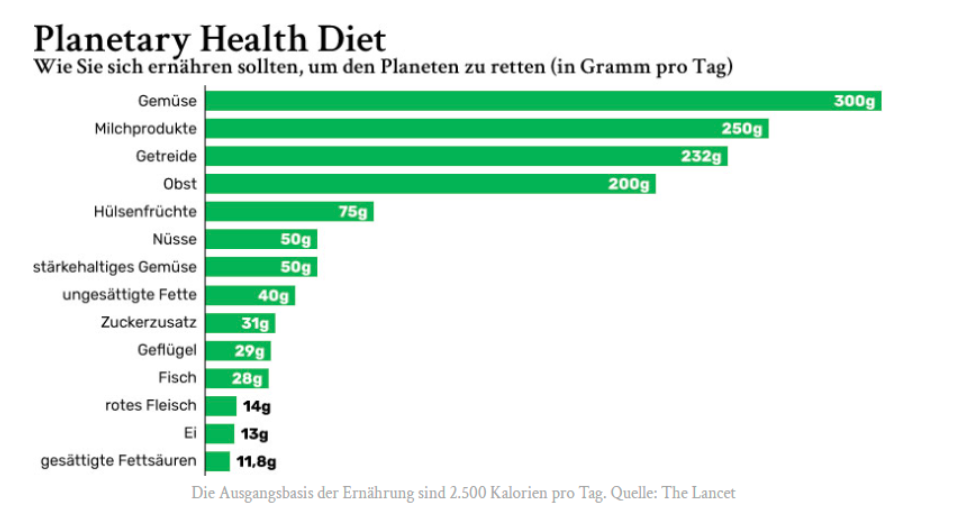
Vegetables: 300 grams (200–600 grams)
Dairy products (whole milk or products made from this amount): 250 grams (0–500 grams)
Whole grains (rice, wheat, maize or other grains): 232 grams
Fruit: 200 grams (100–300 grams)
Legumes: 75 grams (0–100 grams)
Nuts: 50 grams (0–75 grams)
Starchy vegetables (potatoes, cassava): 50 grams (0–100 grams)
Unsaturated fats: 40 grams (20–80 grams)
Sugar (all sweeteners): 31 grams (0–31 grams)
Poultry: 29 grams (0–58 grams)
Fish: 28 grams (0–100 grams)
Red meat (beef, lamb, pork): 14 grams (0–28 grams)
Eggs: 13 grams (0–25 grams)
Saturated fats: 11.8 grams (0–11.8 grams)
These figures are recommended average daily intake values. The ranges shown in brackets allow for flexibility in implementing the Planetary Health Diet according to individual needs.
Source: EAT-Lancet Commission, Healthy Diets from Sustainable Food Systems