




Greenhouse gas emissions vary considerably between different food categories. Meat and dairy products, as well as fish and seafood, generally have the highest climate impact. Fruit, vegetables and cereal products, on the other hand, are associated with comparatively low emissions.
However, there are also significant differences within individual categories. Chicken and pork, for example, generate only a fraction of the emissions associated with beef production. This is particularly true for imported beef from South America, whose footprint can also include emissions from deforestation, as cleared rainforests are no longer able to act as carbon sinks.
Whether locally produced beef has a lower climate impact depends on the production methods and supply chain, including factors such as intensive cattle farming, imported animal feed and transport efficiency.
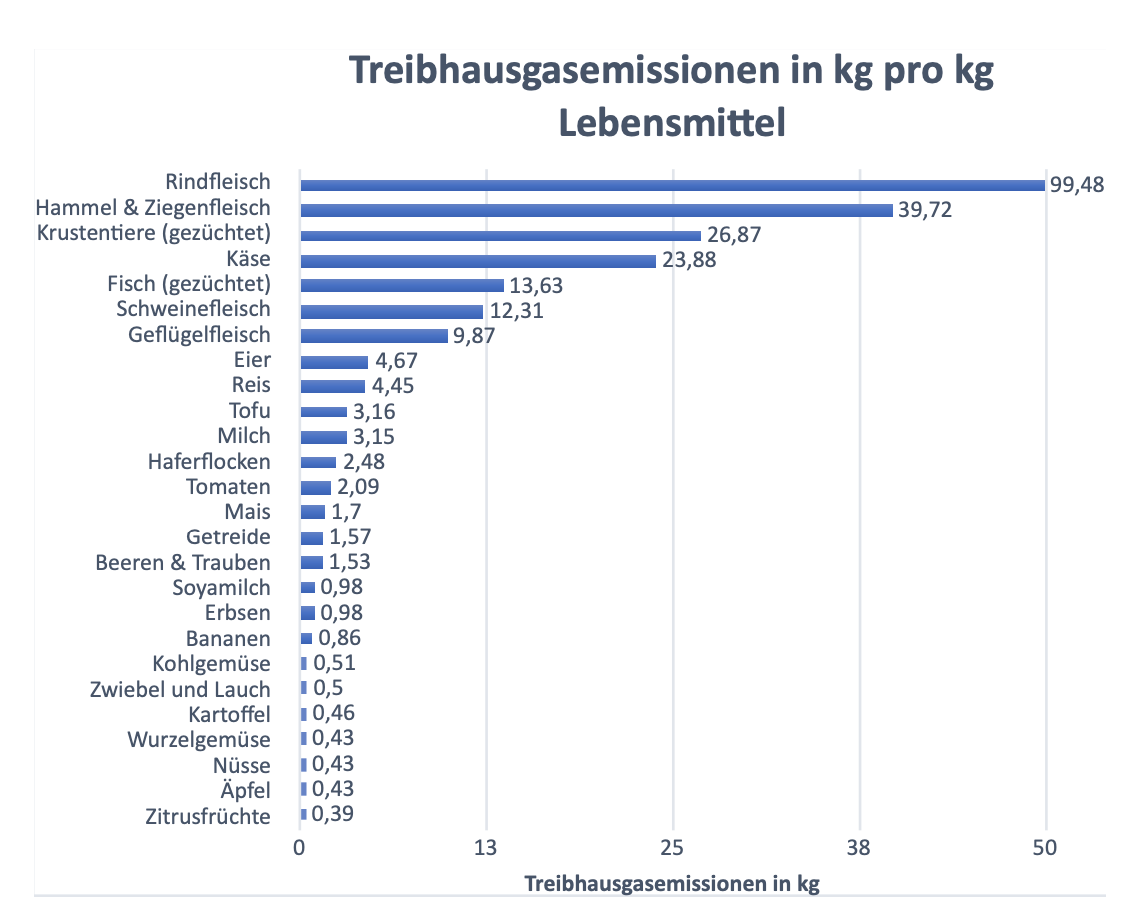
Source: OurWorldInData.org, based on Poore, J., & Nemecek, T. (2018). Reducing food’s environmental impacts through producers and consumers.